Adjustment choice
Observational data cannot tell you which variables to control for. The causal structure
Result
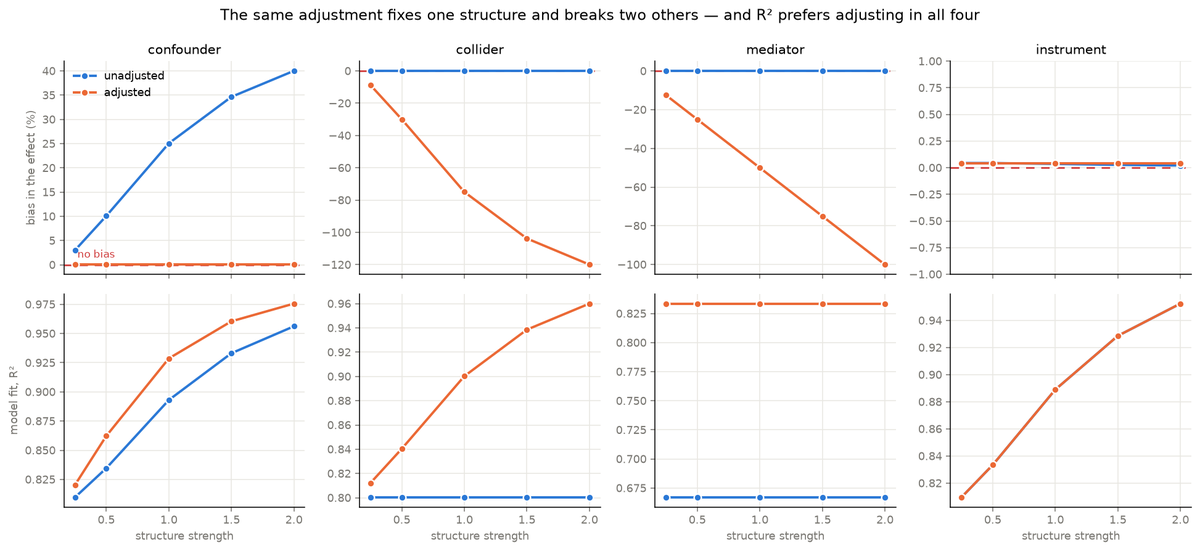
| structure | shape | the correct move |
|---|---|---|
| confounder | `C → T`, `C → Y` | **must** adjust |
| collider | `T → K`, `Y → K` | must **not** adjust |
| mediator | `T → M → Y` | must not, if you want the total effect |
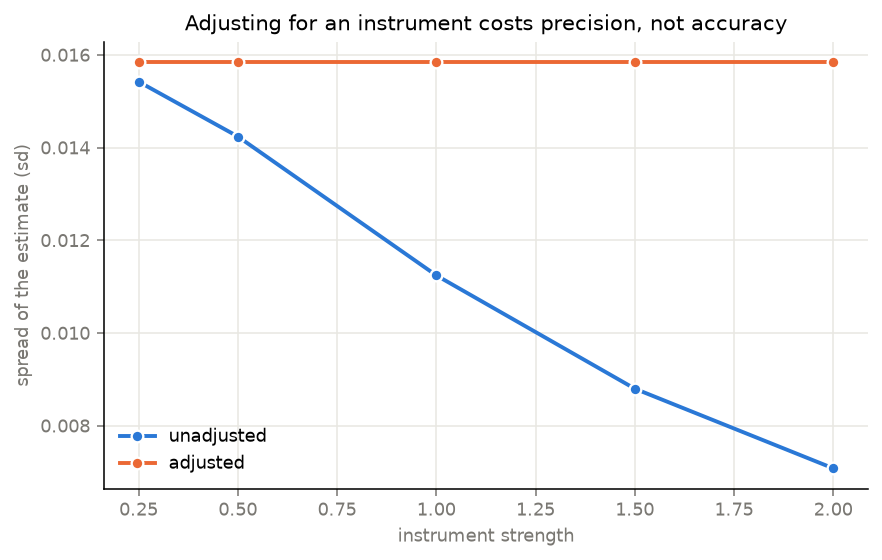
| instrument | `Z → T` | no effect on bias either way |
The finding
Fit quality cannot tell you which
If a practitioner cannot know the structure, the natural fallback is to let the data choose — add the variable, see if the model improves. It always does:
R² prefers adjusting in all four cases and is right in one. That is exactly the score a rule of "always adjust" would get, so R² carries no information about the choice at all.
Adjusting for the collider raises R² from 0.8003 to 0.9002 — a 12.5% improvement in fit — while moving the estimate 75% away from the truth. Better fit, worse answer, measured on the same data.
Figures
Elsewhere
Code and full results on GitHub
Every number is read from the file the run produced. github.com/hammasbuilds · kaggle.com/muhammadhammas13